
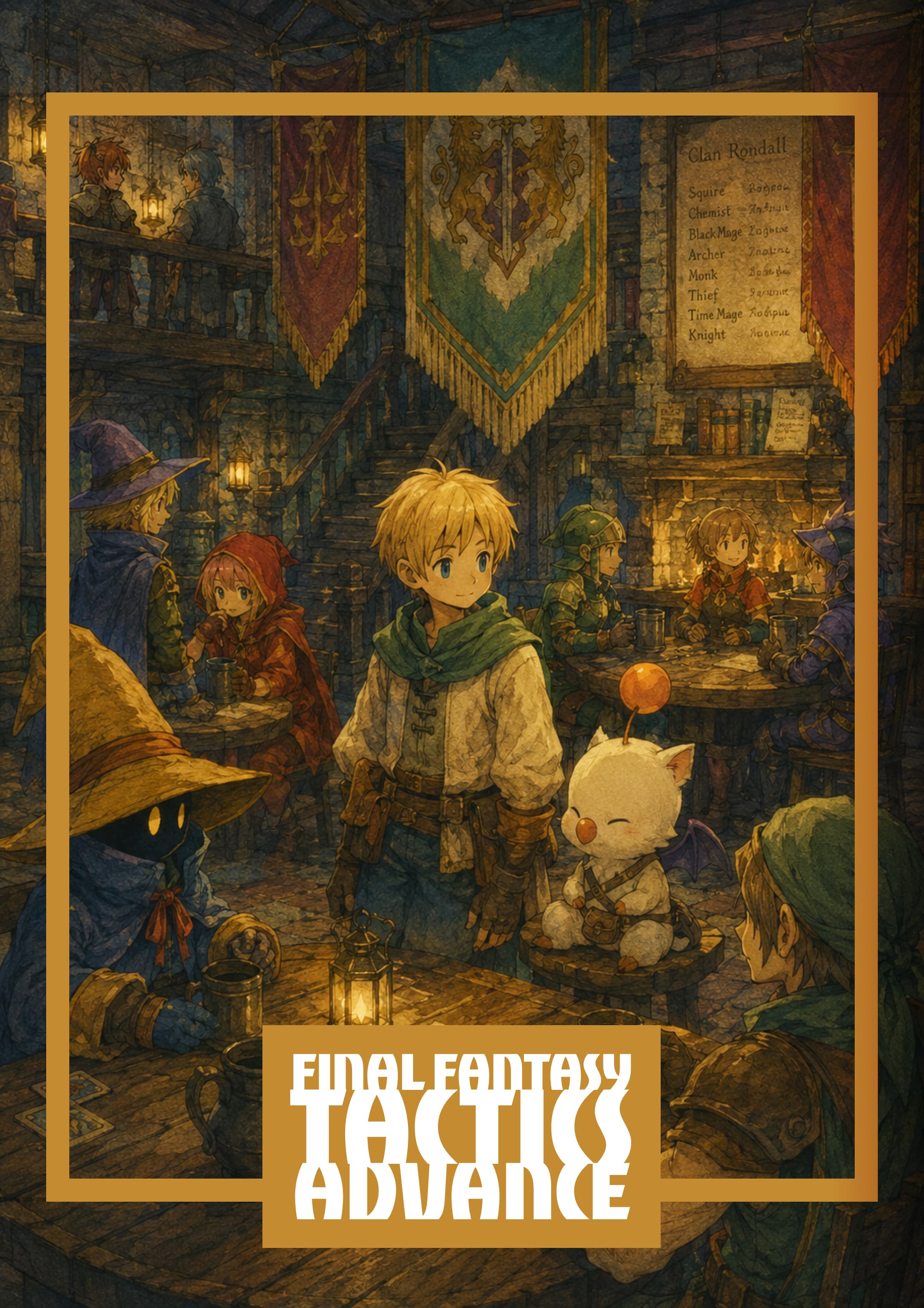
Final Fantasy Tactics is a game with a deep and layered story of political intrigue, betrayal and the complex dynamics of war. It’s dark, gritty and full of over-the-top character names like Argath Thadalfus and Goffard Gaffgarion. Then there’s Final Fantasy Tactics Advance, its lighthearted younger brother, which is about a bunch of school kids who get sucked into a magical storybook. As a 13 year old, I knew which one I preferred.
The earliest memories I have with FFTA are of playing it in the most obtuse setup imaginable — sat at the top of the stairs at a friend’s house, on a GameCube with the Game Boy Player and a 5” MadCatz screen. Clearly I’d do anything back then to avoid running through AA batteries and needing a desk lamp to illuminate the GBA screen. It was a blessing though as it led to us being able to play for hours on end,
What I hadn’t yet realised was just how deep the rabbit hole went. Playing with the huge variety of jobs was already enough to keep me going, but then I realised you could break the rules by mixing them! Suddenly I was
The isometric battlefields held such a depth of character I didn’t think was possible for a game running on a tiny plastic cartridge. The vibrancy of the rivers and flora, the little jugs that cluttered the outskirts of the adobe houses, all of it painted a picture of somewhere I could whisk myself away to. The depth and verticality of the maps felt monumental, ripe with avenues and platforms for my party to launch coordinated attacks from. There was something especially satisfying about having Montblanc the Moogle nestled safely in a canopy of trees, only for him to rain hellish Firaga spells down on the enemy. The omnipresent judge, clad in full plate armour atop his Chocobo, kept everyone in check with the ever-changing laws. These didn’t bother me much until I forgot about them halfway through a fight, sending my main units straight into the slammer. Still, it was only a temporary loss, they’d be back.
That was until Jagd Dorsa. In these barren lands on the outskirts of Ivalice, there were no judges, there were no laws. I revelled in the freedom of it, engaging in a flurry of combat without a care for what unfolded. But then, when the dust had settled and the victory screen appeared, my mage was gone. I went into the clan menu, changed the sorting options, checked the prison, nothing. A character that I’d spent countless hours building up had simply vanished — permadeath, the hidden twist that I never saw coming.
The knot in my stomach would soon settle as I trained up a Viera in place of my fallen mage, using my experience to forge an even greater party. I was back in the safety of familiar lands I’d fought in before, only for an enormous otherworldly portal to tear a hole in reality and spirit me away. Now, inside an ancient ruin, a giant crystal loomed ahead. A voice spoke of my intrusion, the music surged, a hulking boss appeared. “Oh crap”, I thought. I had no idea I’d be fighting anything besides goblins, flans and rival clans. But here I was fighting a god in another dimension. Classic Final Fantasy.
It’s been over 20 years since I first played this game. The memories, the mechanics, the music — none of it ever really left me. Growing up learning code from books and making little websites and MySpace layouts, I had no idea how obsessed I’d become with the grids and squares I found. Countless projects featuring isometric landscapes, pathfinding scripts and job systems — always the same building blocks, always a tactics game. And though each project was more fully realised than the last, none were ever finished. I was always so focused on the gameplay and mechanics that I forgot to latch onto the feeling of playing with my own little party through the magical land of Ivalice.
Perhaps one day I’ll finish my own tactics game, one that captures the same wonder and discovery I felt as that kid at the top of the stairs. But until then, I’ll always have Final Fantasy Tactics Advance — one of my favourite games of all time.


Mix & Match
I always loved seeing what abilities were on the latest weapons in the shop. Blue Mage was an especially tricky job to master, having to learn the abilities from enemies rather than weapons.

Final Fantasy Tactics is a game with a deep and layered story of political intrigue, betrayal and the complex dynamics of war. It’s dark, gritty and full of over-the-top character names like Argath Thadalfus and Goffard Gaffgarion. Then there’s Final Fantasy Tactics Advance, its lighthearted younger brother, which is about a bunch of school kids who get sucked into a magical storybook. As a 13 year old, I knew which one I preferred.
The earliest memories I have with FFTA are of playing it in the most obtuse setup imaginable — sat at the top of the stairs at a friend’s house, on a GameCube with the Game Boy Player and a 5” MadCatz screen. Clearly I’d do anything back then to avoid running through AA batteries and needing a desk lamp to illuminate the GBA screen. It was a blessing though as it led to us being able to play for hours on end, eventually sneaking into the living room to use the widescreen TV when our parents were out. I was so excited to play with even the most basic jobs, such as White Mage or Thief, only to have my mind blown when my friend unlocked Bishop! I was desperate to know how he’d done it. The answer, of course, was buried in the progression systems I’d barely scratched the surface of. Now I needed to explore all of them.
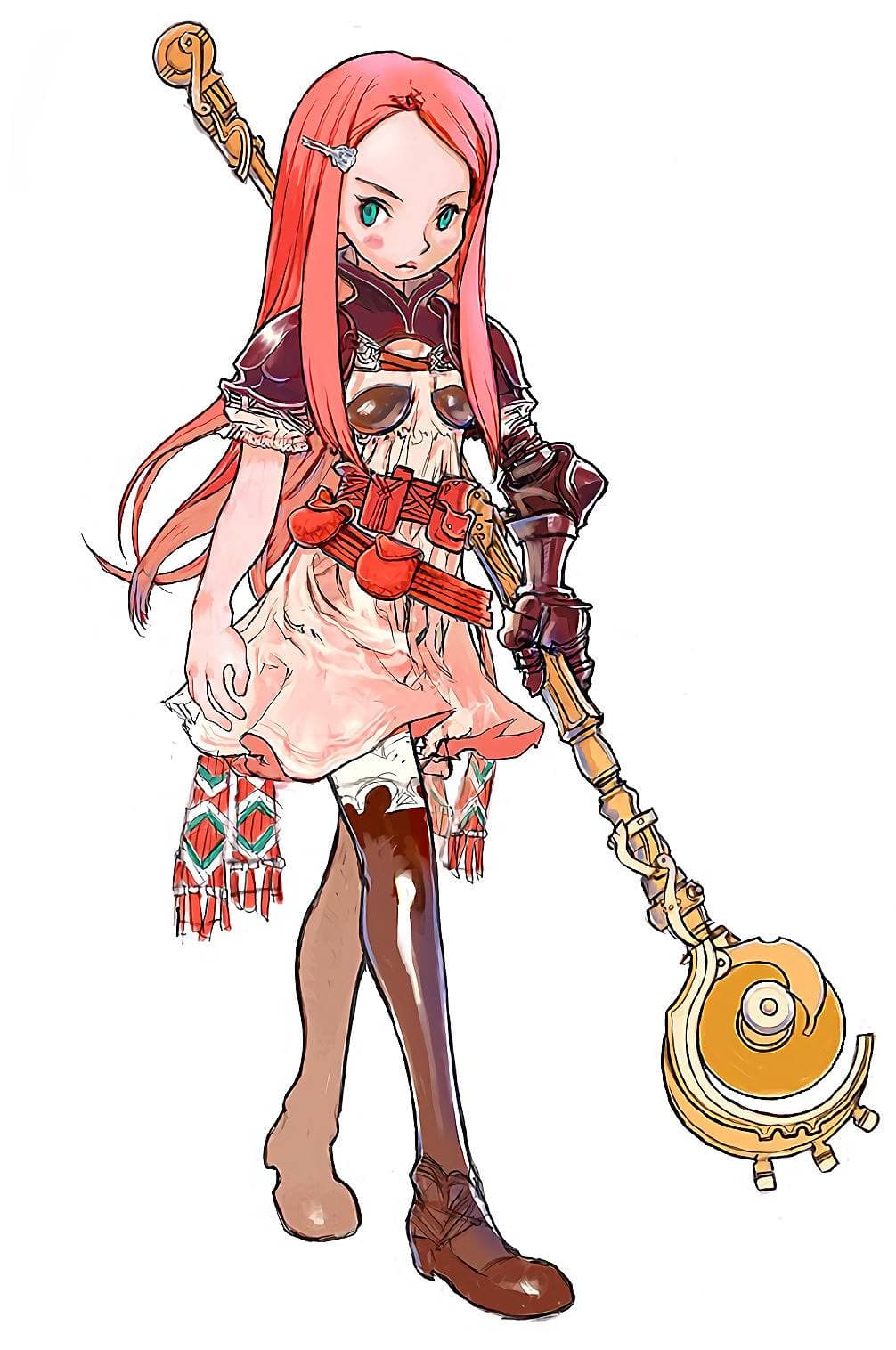
What I hadn’t yet realised was just how deep the rabbit hole went. Playing with the huge variety of jobs was already enough to keep me going, but then I realised you could break the rules by mixing them! Suddenly I was creating Summoner Assassins and Templar Dragoons, scouring the shops after every quest so I could outfit them with the latest gear. Even the weapons themselves were a wonder, flaunting special abilities for jobs I hadn’t unlocked yet. There was still so much to discover as I sculpted my party into a formidable force, ready for combat.
The isometric battlefields held such a depth of character I didn’t think was possible for a game running on a tiny plastic cartridge. The vibrancy of the rivers and flora, the little jugs that cluttered the outskirts of the adobe houses, all of it painted a picture of somewhere I could whisk myself away to. The depth and verticality of the maps felt monumental, ripe with avenues and platforms for my party to launch coordinated attacks from. There was something especially satisfying about having Montblanc the Moogle nestled safely in a canopy of trees, only for him to rain hellish Firaga spells down on the enemy. The omnipresent judge, clad in full plate armour atop his Chocobo, kept everyone in check with the ever-changing laws. These didn’t bother me much until I forgot about them halfway through a fight, sending my main units straight into the slammer. Still, it was only a temporary loss, they’d be back.
That was until Jagd Dorsa. In these barren lands on the outskirts of Ivalice, there were no judges, there were no laws. I revelled in the freedom of it, engaging in a flurry of combat without a care for what unfolded. But then, when the dust had settled and the victory screen appeared, my mage was gone. I went into the clan menu, changed the sorting options, checked the prison, nothing. A character that I’d spent countless hours building up had simply vanished — permadeath, the hidden twist that I never saw coming.
The knot in my stomach would soon settle as I trained up a Viera in place of my fallen mage, using my experience to forge an even greater party. I was back in the safety of familiar lands I’d fought in before, only for an enormous otherworldly portal to tear a hole in reality and spirit me away. Now, inside an ancient ruin, a giant crystal loomed ahead. A voice spoke of my intrusion, the music surged, a hulking boss appeared. “Oh crap”, I thought. I had no idea I’d be fighting anything besides goblins, flans and rival clans. But here I was fighting a god in another dimension. Classic Final Fantasy.
It’s been over 20 years since I first played this game. The memories, the mechanics, the music — none of it ever really left me. Growing up learning code from books and making little websites and MySpace layouts, I had no idea how obsessed I’d become with the grids and squares I found. Countless projects featuring isometric landscapes, pathfinding scripts and job systems — always the same building blocks, always a tactics game. And though each project was more fully realised than the last, none were ever finished. I was always so focused on the gameplay and mechanics that I forgot to latch onto the feeling of playing with my own little party through the magical land of Ivalice.
Perhaps one day I’ll finish my own tactics game, one that captures the same wonder and discovery I felt as that kid at the top of the stairs. But until then, I’ll always have Final Fantasy Tactics Advance — one of my favourite games of all time.